


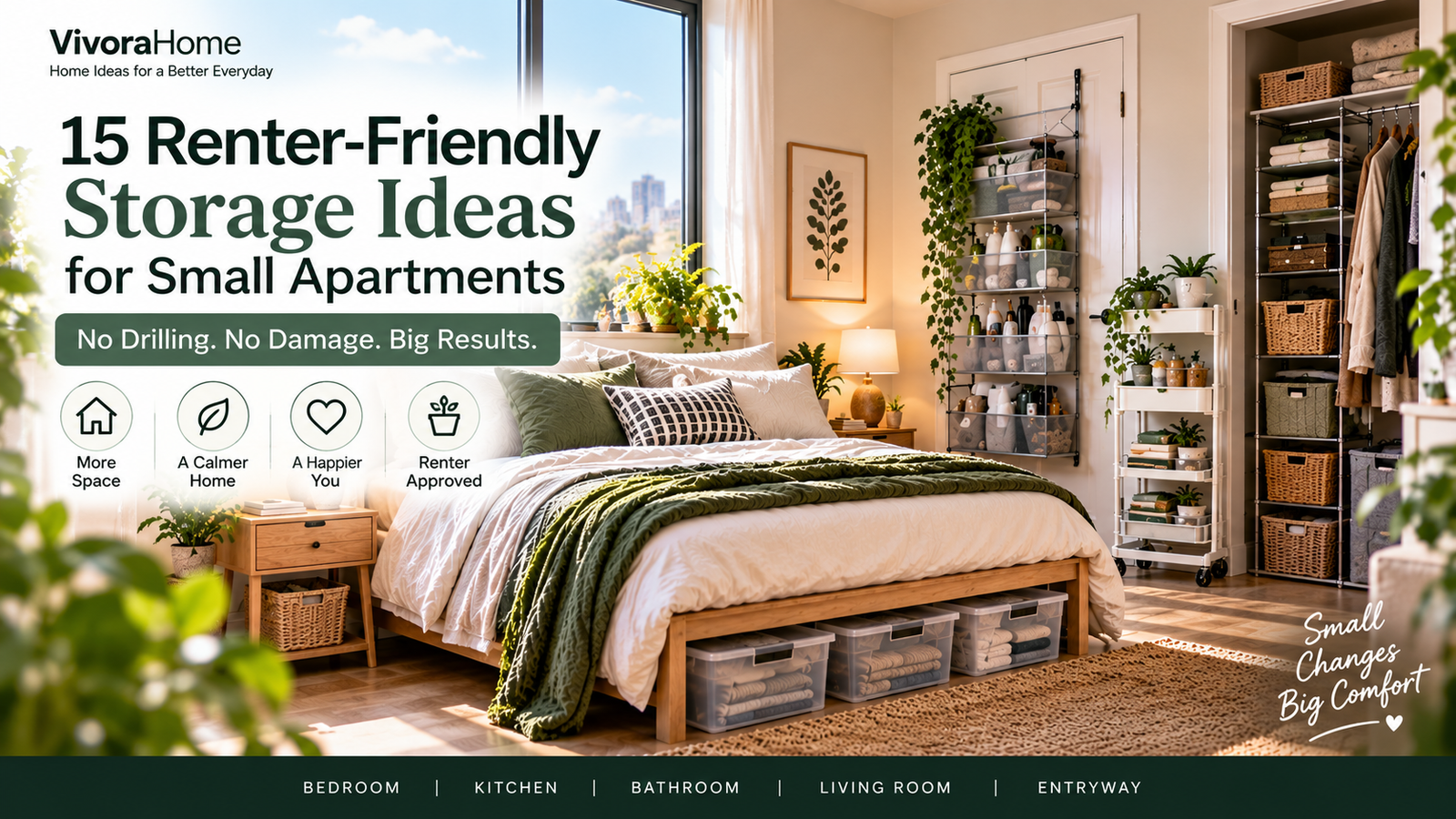
Living in a small apartment doesn’t automatically mean you need more storage products. Often, the real problem is that the space you already have isn’t being used efficiently.
For renters, there’s another challenge: drilling holes, installing permanent shelving, or making structural changes may not be allowed.
The good news is that some of the most useful storage areas in a small apartment are already there—under the bed, behind doors, inside cabinets, above existing shelves, and in narrow gaps between furniture.
These 15 renter-friendly storage ideas focus on practical, no-drill solutions while helping you avoid buying organizers that simply create more clutter.
Before You Buy Anything: Do This 5-Minute Storage Check
Before ordering another organizer, measure the space where it will actually live.
Check:
- Width: How much horizontal space is really available?
- Depth: Will the organizer prevent a cabinet or door from closing?
- Height: Especially important under beds, inside closets, and under sinks.
- Clearance: Can doors, drawers, and nearby furniture still move freely?
- What you’re storing: Heavy bottles need a different solution than scarves, towels, or accessories.
For over-the-door storage, check the thickness of the door and the clearance between the top of the door and its frame.
For under-sink storage, don’t measure only the cabinet. Check where pipes, hoses, and other obstructions are located.
VivoraHome rule: Declutter first. Measure second. Buy third.
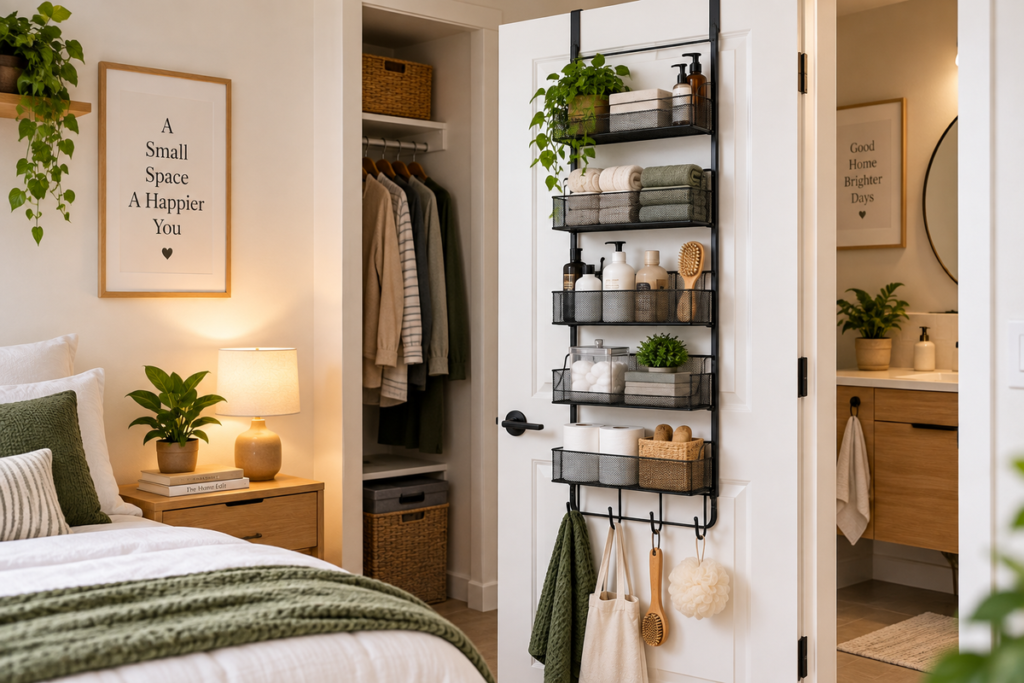
1. Use Over-the-Door Storage
The back of a door is valuable vertical space that is easy to overlook.
Depending on the room, an over-the-door organizer can hold shoes, accessories, toiletries, cleaning supplies, or pantry items.
Best for: Bathrooms, bedrooms, closets, and pantries.
Check before buying: Door thickness, hook dimensions, and whether the door can still close freely.
Skip it if: The organizer interferes with the frame or makes the door difficult to operate.
2. Turn the Space Under Your Bed Into Storage
Under-bed space is particularly useful for belongings you don’t need every day, such as:
- Seasonal clothing
- Spare bedding
- Shoes
- Towels
- Travel accessories
Measure the actual floor-to-bed clearance before choosing containers.
Soft zippered bags can work for irregular items, while rigid containers may be easier to slide in and out frequently.
Best for: Bedrooms with limited closet space.
Skip it if: The container barely fits and scrapes against the bed every time you use it.
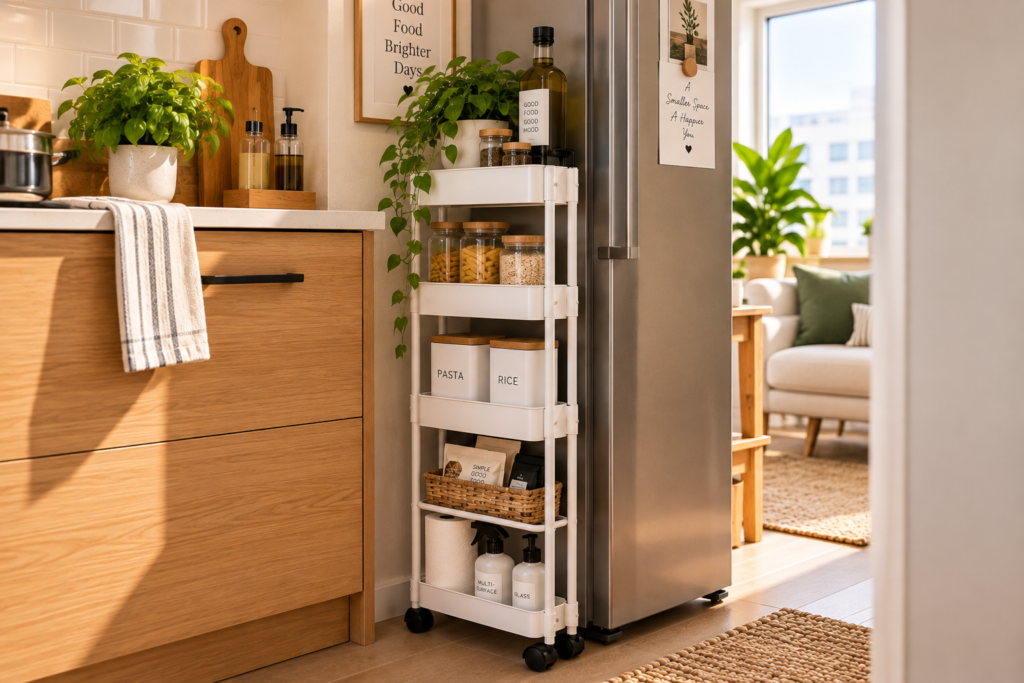
3. Add a Slim Rolling Cart to an Awkward Gap
Look at the narrow spaces beside your refrigerator, washing machine, desk, vanity, or kitchen cabinets.
A slim freestanding cart can turn some of these gaps into accessible storage without attaching anything to a wall.
It can work for toiletries, cleaning supplies, pantry items, or craft materials.
Measure: Width, depth, and enough clearance to pull the cart out.
Skip it if: The cart makes an important walkway too narrow.
4. Use Tension Rods Inside Existing Spaces
Tension rods can create additional usable space without screws when installed between suitable opposing surfaces.
Possible uses include:
- Organizing lightweight accessories
- Creating temporary hanging space
- Dividing some cabinet areas
- Hanging suitable lightweight items
Best for: Small spaces where two stable opposing surfaces are available.
Check before using: Follow the manufacturer’s installation instructions, dimensions, and load limits.
Skip it if: You need structural or heavy-duty storage.
5. Add Shelf Risers Inside Cabinets
Tall cabinet shelves often leave unused vertical space.
A freestanding shelf riser can create another level without permanently altering the cabinet.
This can work well for dishes, mugs, pantry goods, toiletries, or cleaning products.
Best for: Kitchens and bathrooms.
Measure: The usable interior width, depth, and height—not just the outside of the cabinet.
6. Use a Hanging Closet Organizer
If your closet has a hanging rail but very few shelves, a hanging organizer can turn some vertical hanging space into compartments.
Use it for:
- Folded clothes
- Bags
- Towels
- Accessories
- Lightweight shoes
Best for: Closets with excess hanging height but limited shelving.
Skip it if: You already need every inch of the rail for hanging clothes.
The goal isn’t to add an organizer. The goal is to make the closet easier to use.
7. Use Stackable Bins—But Keep Things Accessible
Stacking upward can help you use cabinet and closet height more effectively.
But accessibility matters.
If reaching the bottom container means removing four other containers every time, the system may quickly become frustrating.
For frequently used items, consider small stacks, drawers, or front-access containers.
Best for: Clearly defined categories of belongings.
Skip it if: You’re creating a wall of boxes that you’ll rarely open.
Label opaque containers when you can’t immediately see what’s inside.
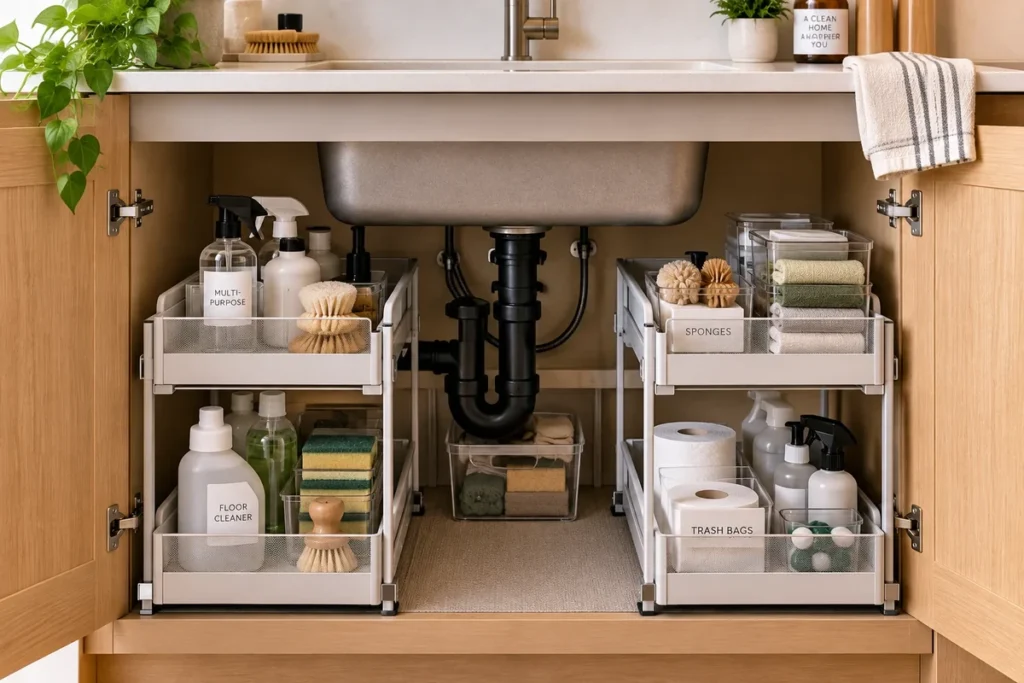
8. Try a Pull-Out Under-Sink Organizer
Under-sink cabinets often look spacious until plumbing occupies the middle.
A useful organizer needs to fit around the plumbing, not simply inside the cabinet.
Before buying, measure:
- Cabinet opening
- Interior width
- Interior depth
- Usable height
- Pipe locations
- Door clearance
A pull-out design can make items stored toward the back easier to reach.
Best for: Bathrooms and kitchens with awkward under-sink storage.
Skip it if: Pipes or hoses prevent the organizer from moving properly.
9. Choose Narrow Shoe Storage for the Entryway
A small entrance can become cluttered quickly because shoes, bags, and everyday belongings all arrive in the same place.
Instead of automatically choosing a deep cabinet, consider shallow or vertical shoe storage sized for the available area.
But don’t measure only the wall.
Measure the walkway too.
A cabinet may technically fit while still making the entrance uncomfortable to use.
Best for: Apartments without a dedicated foyer.
10. Choose Storage Furniture Only When You Need the Furniture
A storage ottoman, bench, or other multifunctional piece can perform two jobs within one footprint.
That doesn’t mean you should replace perfectly good furniture just to gain another compartment.
Consider multifunctional furniture when you already need the furniture itself.
Best for: Blankets, games, occasional-use items, and other medium-sized belongings.
Skip it if: You’re buying bulky furniture solely to hide clutter.
11. Use Vacuum Bags for Truly Seasonal Soft Items
Vacuum storage bags can reduce the space occupied by certain bulky soft items.
They are most useful for belongings you won’t need for a while, such as seasonal textiles or clothing.
They are less convenient for everyday items because repeatedly compressing and reopening them adds unnecessary effort.
Best for: Seasonal rotation.
Skip it if: You need regular access to the contents.
12. Use a Freestanding Coat Rack
If wall-mounted hooks aren’t an option, a freestanding coat rack can create a drop zone without drilling.
It can hold frequently used jackets, hats, scarves, or bags.
However, floor space matters in a small apartment.
Best for: Homes without useful entryway storage.
Skip it if: The rack takes up more valuable floor space than the clutter it solves.
13. Use Bedside or Sofa Caddies
Not every small object requires another piece of furniture.
A hanging bedside or sofa caddy can keep items such as:
- Remotes
- Books
- Glasses
- Chargers
- Small everyday essentials
off limited tabletops.
Best for: Spaces where there isn’t enough room for a full-size nightstand or side table.
14. Use Removable Adhesive Hooks Carefully
Removable adhesive hooks can be useful in rentals, but no drilling does not mean suitable for every wall or every object.
Compatibility, installation, removal instructions, and weight limits vary by product.
Before using one:
- Check the exact product instructions.
- Check whether your wall surface is compatible.
- Respect the stated load limit.
- Check your rental agreement when necessary.
- Follow the recommended removal procedure.
Skip it if: The manufacturer doesn’t recommend the product for your surface or intended use.
Never assume that every adhesive product is automatically damage-free.
15. Create One Daily Drop Zone
Sometimes the best storage improvement isn’t additional capacity. It’s giving frequently used belongings one predictable home.
Create a small drop zone for items such as:
- Keys
- Wallet
- Sunglasses
- Everyday bag
- Pet leash
Depending on the available space, this could be a tray, basket, narrow console, or freestanding organizer.
The important part is consistency: frequently used items should have an obvious place to return to.
Which Storage Solution Fits Your Problem?
| Your Problem | Start With |
|---|---|
| Not enough closet space | Hanging organizer + under-bed storage |
| Tiny bathroom | Door storage + shelf risers |
| Cluttered kitchen cabinets | Shelf risers + accessible stackable storage |
| Difficult under-sink cabinet | Measured pull-out organizer |
| Shoes blocking the entrance | Narrow shoe storage |
| No room for a nightstand | Bedside caddy |
| Unused narrow gap | Slim rolling cart |
| Seasonal clothes everywhere | Under-bed storage or vacuum bags |
| Drilling isn’t allowed | Freestanding, door, or suitable tension solutions |
| Keys and bags always get lost | Daily drop zone |
What Not to Buy for a Small Apartment
More storage products don’t automatically create a more organized home.
Here are some purchases worth reconsidering.
An Organizer Before Measuring
A product that is almost the right size can still be useless.
Measure first.
Large Furniture Just to Hide Clutter
You may sacrifice more usable floor space than you gain in storage.
Containers Without a Specific Purpose
Decide what will live inside the container before buying it.
Deep Bins for Frequently Used Items
If everyday belongings become difficult to reach, your organization system creates another problem.
Adhesive Products Without Checking Compatibility
Different products have different surface requirements, installation instructions, and load limits.
More Storage for Things You Don’t Need
Sometimes decluttering is the cheapest and most effective space-saving solution available.
Start With One Zone
Don’t try to reorganize your entire apartment at once.
Choose the area causing the most daily frustration.
Shoes everywhere? Start with the entryway.
Bathroom counter crowded? Look at the space behind the door and under the sink.
Closet overflowing? Declutter first, then examine unused vertical and under-bed space.
Solve one problem, use the new system for a while, and then move to the next area.
A small apartment becomes easier to manage when every storage decision solves a specific problem rather than simply adding another product.
Frequently Asked Questions
How Can I Add Storage to a Rental Without Drilling?
Start with unused existing spaces such as behind doors, under beds, and inside cabinets. Freestanding organizers, suitable tension systems, and certain removable products can also create storage without permanent installation.
What Should I Measure Before Buying Storage Organizers?
At minimum, measure width, depth, and height. Depending on the location, also check door movement, walkways, plumbing, bed clearance, and other obstructions.
Are Adhesive Hooks Safe for Rental Walls?
It depends on the exact product, wall surface, installation, and removal method. Follow the manufacturer’s instructions and check your rental agreement when appropriate. No-drill should not automatically be interpreted as damage-free.
What Is the Best Storage Idea for a Very Small Apartment?
There isn’t one universal solution. Identify the biggest recurring clutter problem first, then look for unused space close to where those belongings are actually used.
Should I Buy Organizers Before Decluttering?
Usually, decluttering first is more useful. It shows you how much storage you actually need and helps prevent buying organizers for belongings you no longer want.